When you purchase through links on our site, we may earn an affiliate commission.
Quick Verdict
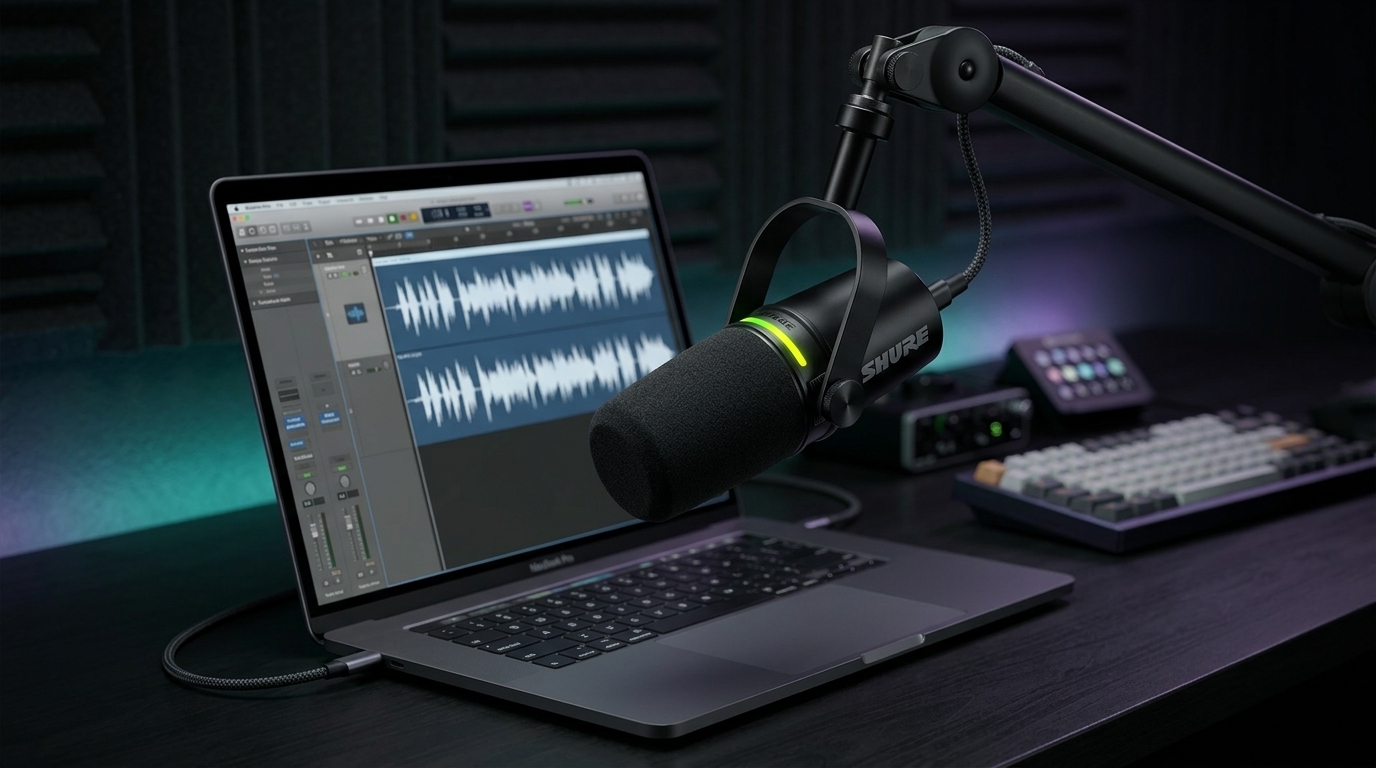
The Shure MV7 mic is one of the most intelligently designed microphones available for modern content creators. It combines broadcast-grade dynamic microphone performance with the convenience of USB connectivity, making it equally suitable for beginners and professionals. Inspired by Shure’s legendary broadcast microphones, the MV7 delivers focused, intimate vocal sound, excellent background noise rejection, and long-term reliability that very few microphones in its category can match.
It is not the cheapest USB microphone on the market, and it does not aim to replace a high-end condenser microphone in a fully treated studio. However, for podcasters, streamers, YouTubers, educators, and professionals recording in real-world environments, the Shure MV7 mic is one of the safest and smartest long-term investments you can make.
Introduction: Why the Shure MV7 mic Exists
Over the past decade, audio quality has become one of the most important factors in digital content creation. Audiences will often tolerate average video quality, but they are far less forgiving when it comes to poor sound. Echo, background noise, distortion, and inconsistent volume are among the fastest ways to lose listener trust.
As podcasting, livestreaming, YouTube education, and remote work became mainstream, creators found themselves stuck between two imperfect choices. On one side were USB microphones—easy to use, but often overly sensitive, harsh, and unforgiving in untreated rooms. On the other side were professional broadcast microphones—warm and controlled, but demanding audio interfaces, gain staging, and technical knowledge that many creators did not want to deal with.
The Shure MV7 mic was created specifically to solve this problem.
This review takes a deep, practical look at the Shure MV7 mic from the perspective of real-world use. Rather than focusing only on specifications, it explores how the microphone behaves in everyday environments, how it fits into different workflows, and whether it truly delivers on its promise of broadcast-quality sound without broadcast-level complexity.
What Is the Shure MV7 mic?
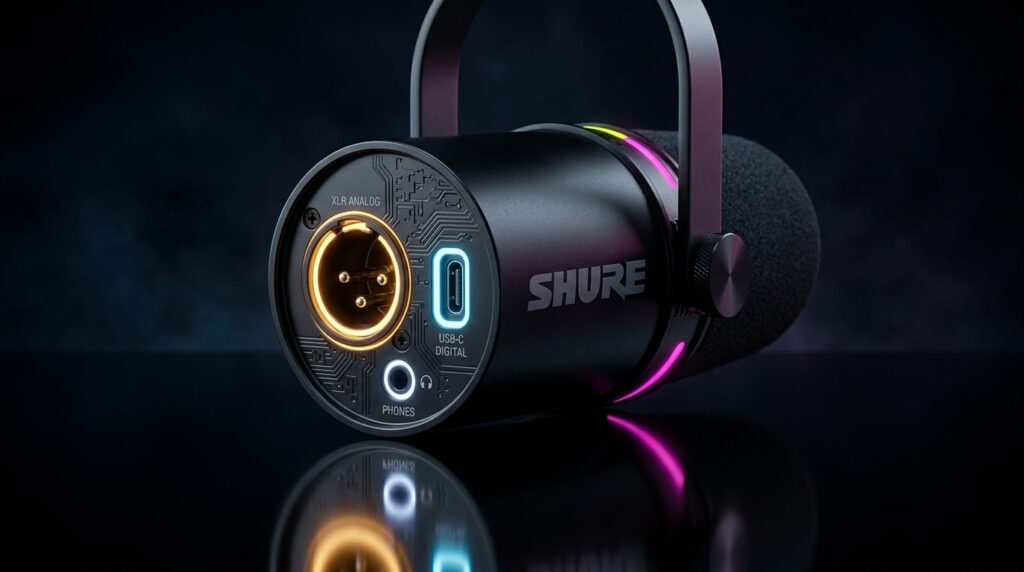
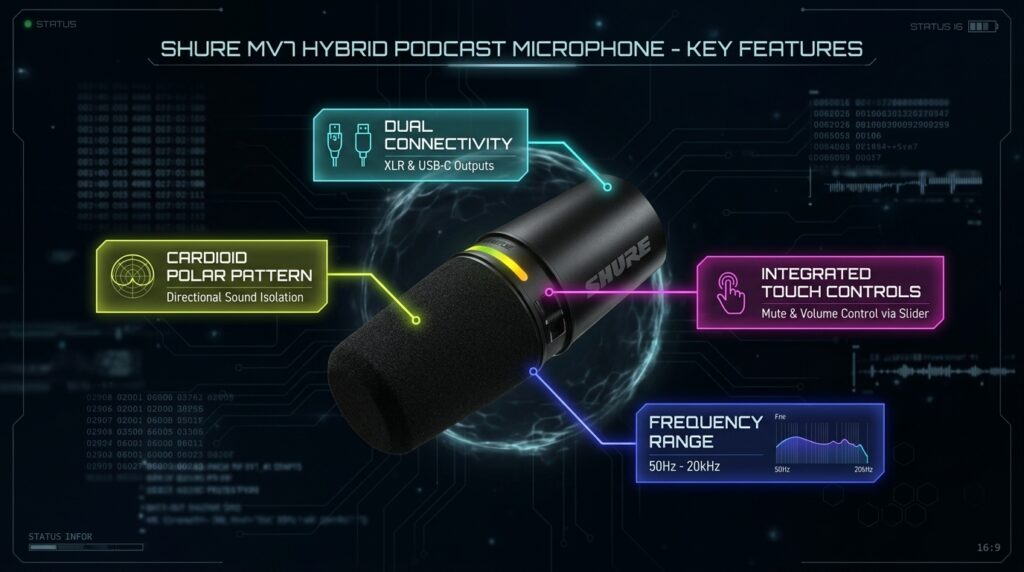
The Shure MV7 mic is a dynamic cardioid microphone featuring dual USB and XLR outputs. It was designed as a modern, creator-focused alternative to Shure’s iconic broadcast microphone, the Shure SM7B.
Unlike most microphones that force you to choose between USB or XLR, the MV7 supports both. This hybrid approach allows users to start with a simple plug-and-play USB setup and later transition into a full professional audio chain without replacing the microphone.
This flexibility is the core of the MV7’s appeal. It is a microphone that grows with you, rather than one you outgrow.
Who the Shure MV7 mic Is Designed For
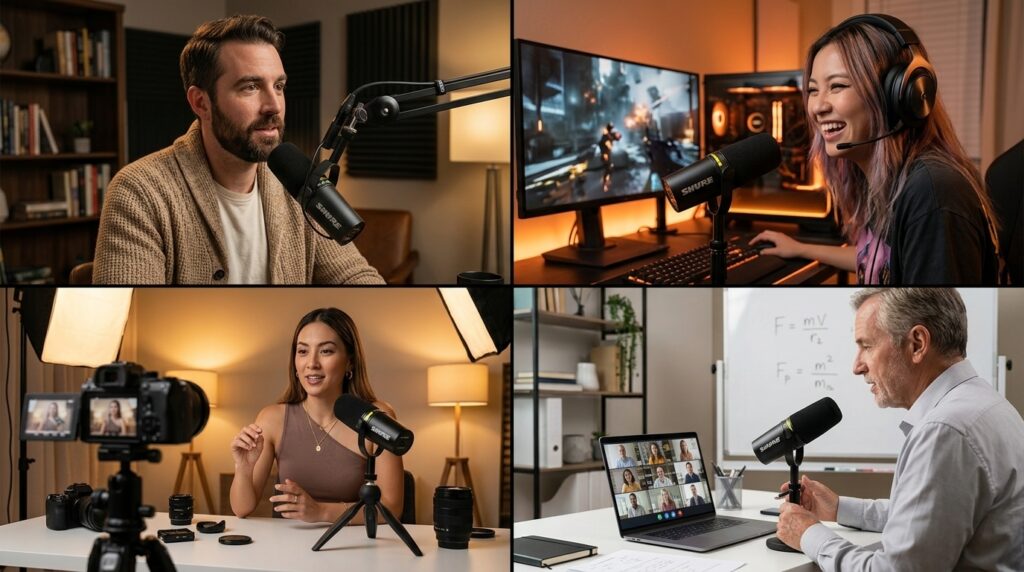
The Shure MV7 mic is tuned and engineered primarily for spoken-word content. It is not intended to be a general-purpose studio microphone for every scenario, and that focus is exactly what makes it so effective for its target audience.
The MV7 is especially well suited for:
- Podcasters recording solo or with remote guests
- Streamers and gamers who need strong noise rejection
- YouTubers and voice-over artists
- Journalists and broadcasters
- Educators and online course creators
- Professionals using Zoom, Microsoft Teams, or Google Meet
- Creators recording in untreated or noisy rooms
If your priority is clear, intelligible voice with minimal room interference, the MV7 is built for you.
Shure’s Broadcast Heritage (And Why It Matters)
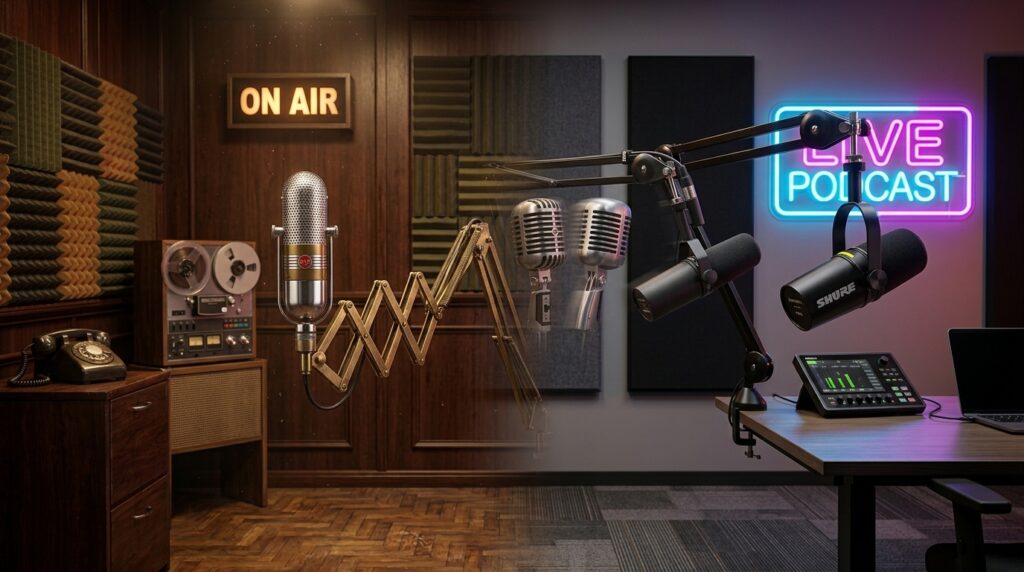
Shure is not a brand chasing trends. The company has been shaping professional audio for nearly a century, with microphones used in radio studios, television broadcasts, recording studios, concert stages, and even presidential addresses.
The SM7B, in particular, became a benchmark in broadcasting because it solved a very specific problem: capturing voices cleanly in less-than-ideal environments. It rejected room noise, handled loud voices gracefully, and delivered a natural, fatigue-free sound without requiring heavy processing.
When Shure developed the MV7, the goal was not to replace the SM7B. Instead, it was to translate that broadcast DNA—noise rejection, vocal focus, and reliability—into a microphone designed for modern digital creators who may not have access to a full studio setup.
Key Specifications
| Feature | Specification |
|---|---|
| Microphone type | Dynamic |
| Polar pattern | Cardioid |
| Frequency response | 50 Hz – 16 kHz |
| Connectivity | USB-C and XLR |
| USB audio resolution | 24-bit / 48 kHz |
| Headphone output | 3.5 mm |
| Monitoring | Zero-latency |
| Controls | Touch-sensitive panel |
| Software | ShurePlus MOTIV |
| Weight | ~550 g |
| Construction | All-metal body |
| Mounting | Yoke mount (boom-arm compatible) |
These specifications are not just numbers. Each one directly affects how the microphone behaves in real recording situations, especially in untreated rooms where many creators work.
Design and Build Quality
The first thing most people notice when they pick up the Shure MV7 mic is its weight. This is not a lightweight consumer USB microphone. It has a dense, solid feel that immediately communicates durability and professionalism.
The microphone features a full metal chassis with a matte black, non-reflective finish that looks equally at home in a studio or on a streaming desk. The grille and internal windscreen are robust, and the yoke mount is compatible with standard boom arms, making positioning easy and stable.
Internally, the MV7 includes shock isolation that helps reduce handling noise, desk vibrations, and accidental bumps. This is particularly important for streamers and podcasters who move during recording sessions.
Overall, the build quality reflects Shure’s broadcast heritage. The MV7 feels like equipment designed for daily use, not a fragile accessory.
Controls and Physical Interface
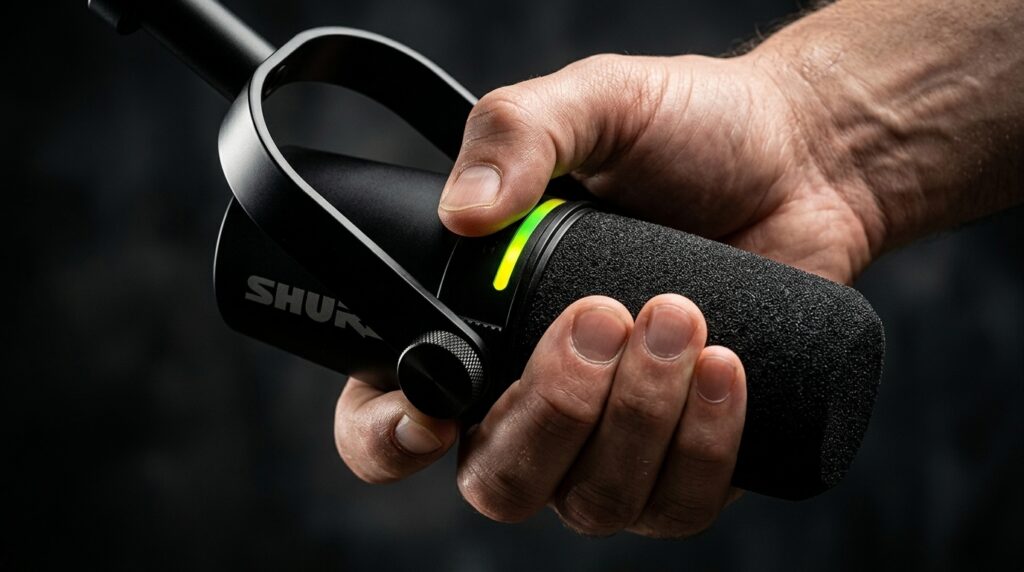
Instead of traditional knobs, the Shure MV7 mic uses a touch-sensitive control strip. This keeps the design clean while reducing mechanical wear over time.
Through the touch panel, you can:
- Adjust microphone gain
- Adjust headphone volume
- Instantly mute the microphone
LED indicators provide clear visual feedback, which is useful during livestreams and video calls without being distracting on camera.
Setup and Ease of Use
USB Mode: Plug-and-Play Simplicity
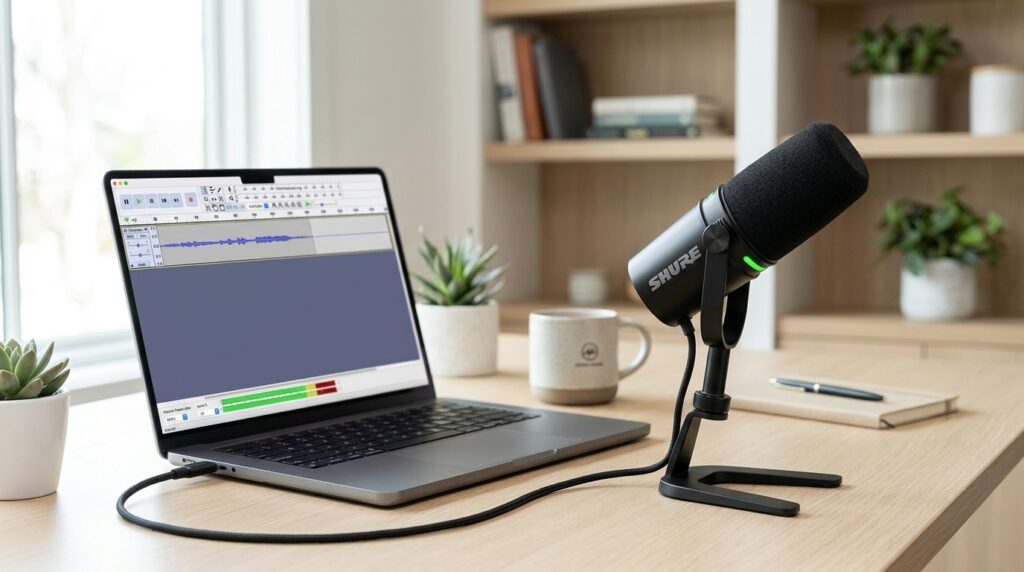
Using the Shure MV7 mic via USB is extremely straightforward. You simply connect it to your computer, select it as your input device, and start recording. No audio interface, drivers, or complicated configuration is required.
USB mode is ideal for:
- Beginners
- Streamers
- Remote professionals
- Mobile or temporary setups
For many users, USB mode alone delivers audio quality that is already a significant upgrade over typical USB condenser microphones.
XLR Mode: Professional Expansion

When connected via XLR, the MV7 behaves like a traditional broadcast dynamic microphone. It does not require phantom power and works with audio interfaces, mixers, and podcast consoles.
This allows the MV7 to transition smoothly into more advanced setups as your needs evolve, without forcing you to replace your microphone.
Sound Fundamentals: The MV7’s Core Voice
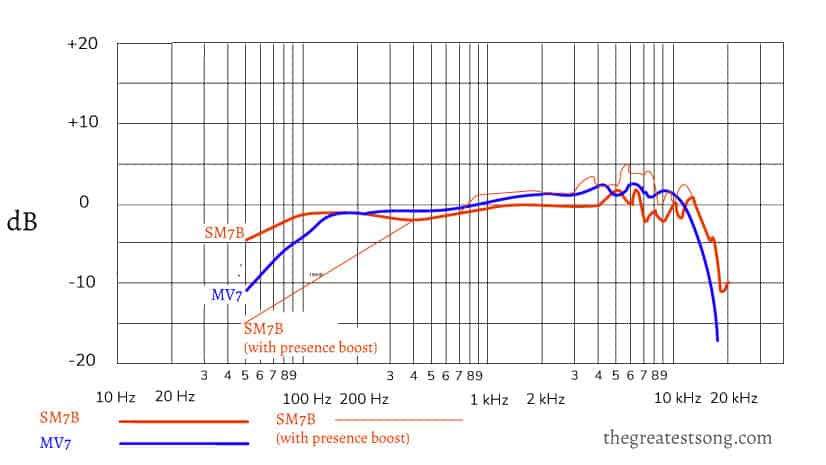
At its core, the Shure MV7 mic is voiced for clarity and comfort rather than exaggerated detail. Its tuning emphasizes the midrange frequencies where speech intelligibility lives, while keeping high frequencies smooth and non-fatiguing.
The result is a sound that is:
- Warm but controlled
- Focused and intimate
- Free of harsh sibilance
- Easy to listen to over long periods
This tuning is one of the main reasons the MV7 performs so well for podcasts, livestreams, and spoken-word content.
Advanced Sound Behavior: Why the Shure MV7 mic Sounds the Way It Does
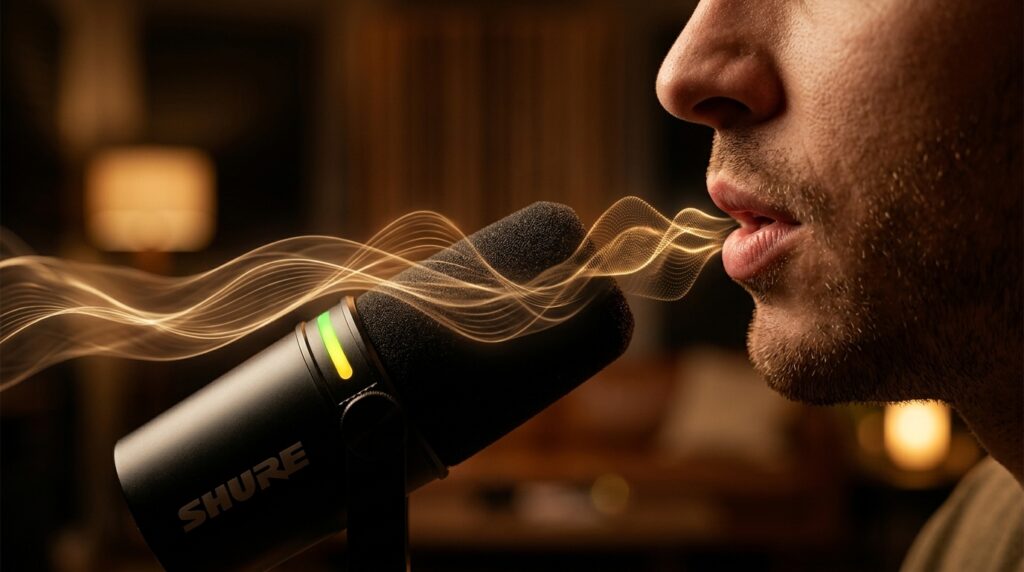
To really understand the Shure MV7 mic, it helps to look beyond simple descriptors like “warm” or “clear” and examine how the microphone behaves from an engineering perspective. Much of what people describe as the MV7’s “broadcast sound” comes from deliberate design choices that prioritize control, consistency, and intelligibility over exaggerated detail.
Dynamic vs Condenser Microphones: The Core Difference
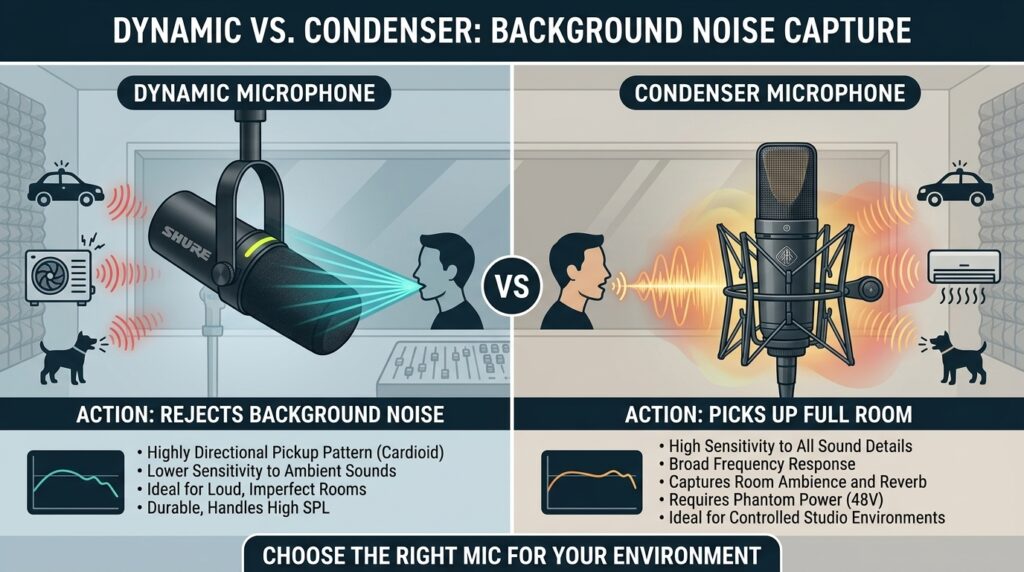
The Shure MV7 mic is a dynamic microphone, and that single fact explains many of its strengths.
Dynamic microphones use a moving coil attached to a diaphragm within a magnetic field. This design makes them:
- Less sensitive to quiet background sounds
- More resistant to sudden volume spikes
- Better at handling loud or energetic speech
Condenser microphones, by contrast, use electrically charged diaphragms that are far more sensitive. While this sensitivity allows condensers to capture fine detail, it also makes them more prone to picking up room reflections, keyboard noise, and ambient sound.
The MV7’s dynamic capsule is not a compromise—it is a deliberate choice aimed at creators who record in real rooms, not perfectly treated studios.
Sound Pressure Levels and Loud Voices
One of the most practical advantages of the Shure MV7 mic is how well it handles high sound pressure levels. In everyday terms, this means that excited speech, laughter, emphasis, and even shouting are less likely to cause distortion or harsh clipping.
For streamers and podcasters who speak energetically, this behavior is invaluable. Where some condenser microphones require careful gain riding, the MV7 absorbs sudden changes in volume gracefully, keeping the recording usable even during unpredictable moments.
Distance Matters: How Placement Changes the Sound
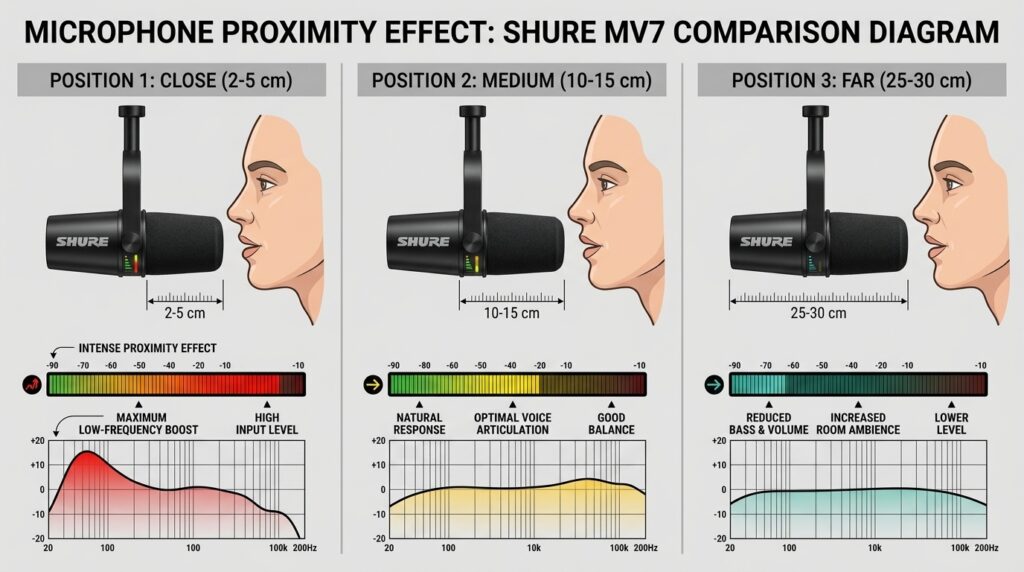
Like most dynamic microphones, the Shure MV7 mic responds noticeably to changes in distance. Understanding this behavior allows you to shape your sound without touching any software controls.
Close Distance (2–5 cm)
At very close distances, the MV7 exhibits a pronounced proximity effect:
- Bass response increases
- Voice sounds warmer and more authoritative
- Plosives become more likely if technique is poor
This distance is commonly used for radio-style narration and intimate podcast delivery. Speaking slightly off-axis helps reduce plosive sounds.
Medium Distance (10–15 cm)
For most users, this is the ideal working distance:
- Bass remains present but controlled
- Clarity is maximized
- Breath noise is minimized
- Room sound stays subdued
This distance produces the most balanced results for podcasts, streams, and voice-over work.
Far Distance (25–30 cm)
At longer distances:
- Bass response decreases
- Voice becomes more neutral and lighter
- Room reflections become slightly more audible
Even here, the MV7 performs better than most condenser microphones because its lower sensitivity and directional pattern keep the voice dominant.
Proximity Effect as a Creative Tool
Many beginners see proximity effect as a flaw. In professional broadcasting, it is treated as a tool.
With the MV7:
- Moving closer adds warmth and intimacy
- Pulling back increases neutrality
- Small adjustments produce audible tonal changes
This allows creators to control vocal character naturally, without relying heavily on EQ.
Plosives, Breath Noise, and Sibilance Control
The Shure MV7 mic includes an internal windscreen that already does a solid job of reducing plosives. With good mic technique, additional accessories are often unnecessary.
Best practices include:
- Speaking slightly to the side of the microphone
- Avoiding direct airflow into the capsule
- Maintaining consistent distance
Because the MV7 does not aggressively boost high frequencies, sibilance (“S” sounds) remains smooth and controlled. This reduces the need for heavy de-essing and makes long listening sessions more comfortable for audiences.
Voice Type Performance
One of the strengths of the Shure MV7 mic is how well it adapts to different voices.
- Deep male voices benefit from strong midrange clarity without excessive boom
- Softer or quieter voices remain clean when the microphone is placed closer
- Female voices sound clear and smooth without brittleness
- Higher-pitched or nasal voices are often tamed compared to bright condenser microphones
This flexibility makes the MV7 a safe choice when multiple speakers or guests are involved.
Off-Axis Rejection and Directionality
The MV7’s cardioid polar pattern is tight and predictable. Sounds coming from the sides and rear are significantly reduced and tend to sound dull rather than distorted.
In practical terms, this helps minimize:
- Keyboard noise
- Mouse clicks
- Desk vibrations
- Nearby conversations
Proper angling of the microphone can dramatically improve clarity without touching any software settings.
Mechanical Noise and Handling Isolation
Internally, the Shure MV7 mic includes shock isolation that reduces mechanical noise. This helps limit the impact of:
- Boom arm movement
- Desk vibrations
- Accidental bumps
For creators who move while speaking or stream for long periods, this isolation contributes to a more consistent recording.
USB vs XLR: How the Sound Changes
One of the MV7’s defining features is its dual connectivity, and each mode has its own character.
USB Mode Sound
In USB mode:
- The signal is slightly processed
- Dynamics are controlled and consistent
- Auto Level Mode can smooth out volume changes
This makes USB mode ideal for streaming, conferencing, and quick setups where reliability matters more than raw flexibility.
XLR Mode Sound
In XLR mode:
- The signal is more raw and natural
- External preamps and processors shape the sound
- Greater headroom is available
XLR mode is preferred by users who want full control over their audio chain, but it requires more setup and knowledge.
Monitoring and Headphone Output
The Shure MV7 mic includes a built-in 3.5 mm headphone output for zero-latency monitoring. This allows you to hear your voice in real time without distracting delay.
The headphone amplifier is strong enough for most studio headphones and provides clean, undistorted monitoring, which is especially useful for podcasters and live streamers.
Why the Shure MV7 mic Is Often Described as “Broadcast Sound”
The broadcast character people associate with the Shure MV7 mic is not marketing language. It comes from a combination of:
- Controlled frequency response
- Moderate proximity effect
- Strong off-axis rejection
- Smooth handling of transients
- Low sensitivity to ambient noise
Together, these traits produce a voice that sounds focused, professional, and easy to listen to—exactly what spoken-word content demands.
Real-World Performance: How the Shure MV7 mic Handles Everyday Environments
Microphone reviews often focus on how a product sounds in ideal conditions, but most creators do not record in ideal rooms. Bedrooms, shared apartments, and home offices introduce challenges that quickly expose a microphone’s weaknesses. This is where the Shure MV7 mic consistently proves its value.
Recording in an Untreated Bedroom
An untreated bedroom is one of the most common recording environments for podcasters and YouTubers. Hard walls, low ceilings, and mixed furniture surfaces create reflections that can make voices sound boxy or echoey.
In this scenario, the Shure MV7 mic performs noticeably better than most USB condenser microphones. Its dynamic capsule does not exaggerate reflections, and its cardioid pickup pattern focuses tightly on the speaker. Even without acoustic panels, the voice remains clear and forward, with room tone kept under control.
While no microphone can completely eliminate echo in a bare room, the MV7 minimizes it enough that recordings sound clean and professional without heavy post-processing.
Home Office With Fans or Air Conditioning
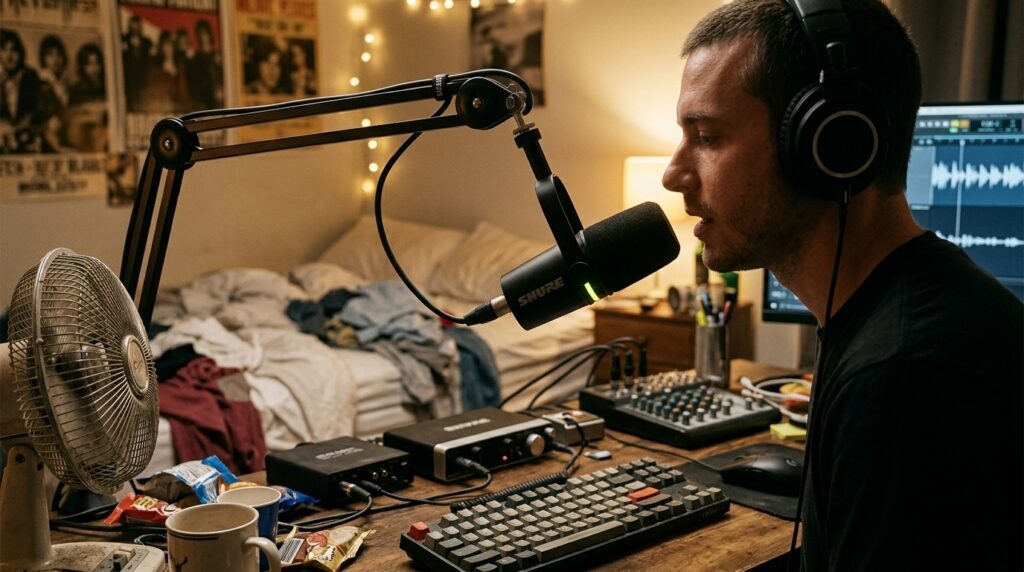
Office environments introduce constant background noise from computer fans, air conditioning units, and electronics. Condenser microphones often pick up these sounds, forcing creators to rely on noise reduction software that can degrade audio quality.
The Shure MV7’s lower sensitivity makes it naturally resistant to this kind of noise. When positioned correctly, fan and AC noise drops significantly in level compared to the voice. This allows speech to remain dominant in the mix without aggressive noise suppression.
For remote professionals and educators, this behavior is one of the MV7’s most practical advantages.
Streaming Desk With Mechanical Keyboard and Mouse
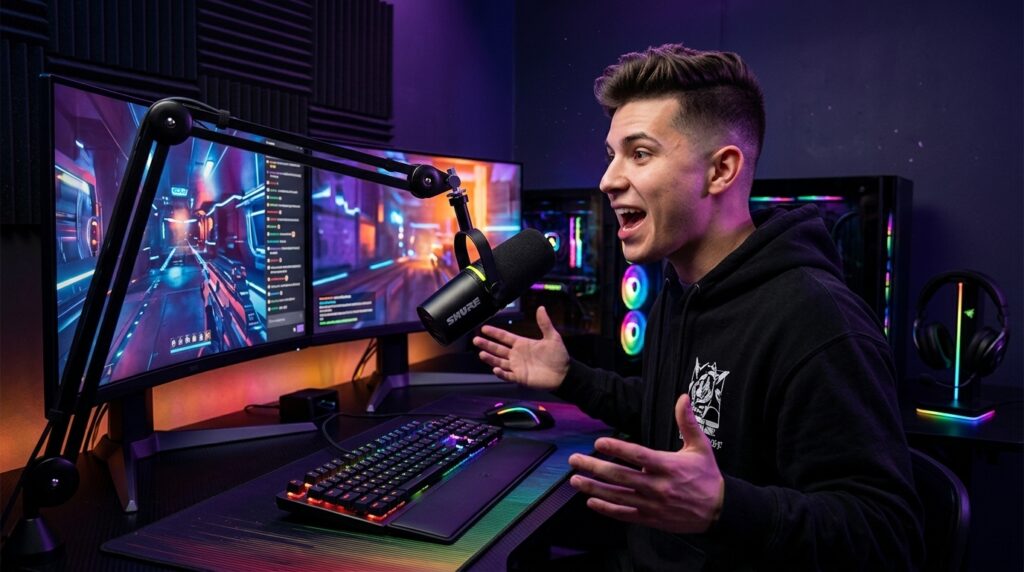
For streamers, keyboard and mouse noise is one of the biggest audio challenges. Mechanical switches, desk vibrations, and hand movements can easily bleed into a microphone.
When mounted on a boom arm and angled properly, the MV7 does an excellent job rejecting these sounds. Off-axis noise such as typing and clicking is attenuated, while the voice remains clear and present. Internal shock isolation further reduces vibrations transmitted through the desk.
This makes the MV7 particularly well suited for live streaming setups where constant movement is unavoidable.
Large or Echo-Heavy Rooms
Large rooms with minimal furniture, tile floors, or high ceilings are challenging for any microphone. Reflections build up quickly, and voices can sound distant or hollow.
The Shure MV7 mic cannot defy physics, but it performs better than most sensitive microphones in this environment. The voice stays intelligible, and reflections are less distracting. While some room sound remains, it is subdued enough to keep recordings usable, especially for spoken-word content.
In these situations, simple steps like moving closer to the microphone and reducing room distance can yield significant improvements.
Desk Stand vs Boom Arm
The MV7 can be used on a desk stand, but its performance improves noticeably when paired with a boom arm.
A desk stand places the microphone closer to typing noise and desk vibrations. A boom arm allows better positioning, reduces mechanical noise, and makes it easier to maintain optimal distance and angle.
For most users, a boom arm is one of the highest-impact upgrades they can make, often improving audio more than changing microphones.
Long Recording Sessions and Listener Fatigue
Long podcasts and livestreams reveal problems that short recordings do not. Bright microphones can become tiring to listen to, and inconsistent dynamics can frustrate audiences.
The Shure MV7’s smooth high-frequency response helps prevent listener fatigue during long sessions. Voices remain comfortable to listen to over hours, and the microphone’s controlled dynamics reduce the need for constant volume adjustments.
This makes the MV7 particularly well suited for long-form podcasts, gaming streams, and extended online classes.
Remote Interviews and Video Calls
In video conferencing and remote interviews, clarity and consistency matter more than absolute fidelity. Sudden volume changes, background noise, and echo can disrupt communication.
The MV7 delivers clear articulation and stable levels in these scenarios. USB mode, especially with automatic gain control enabled, handles variations in speaking volume gracefully. Background noise is reduced enough that speech remains the focus, even in shared spaces.
For professionals who rely on clear communication, this alone can justify the microphone.
Multiple People in the Same Room
Recording in a shared space with other people talking nearby is not ideal, but it is sometimes unavoidable. Thanks to its directional pattern, the MV7 reduces off-axis voices significantly. Nearby speech sounds quieter and duller compared to the main speaker, making it easier to manage in post.
While no microphone can fully isolate a voice in this situation, the MV7 performs better than most USB microphones and remains usable in scenarios where others struggle.
On-Camera Presence and Visual Impact
For video creators, appearance matters. The Shure MV7 mic has a clean, professional broadcast aesthetic that looks appropriate on camera without drawing attention away from the speaker.
It fits naturally into streaming setups, podcast studios, and corporate environments alike. This visual consistency reinforces the perception of professionalism, especially for audiences watching long-form content.
Common Real-World Mistakes and How the MV7 Responds
Creators often make small mistakes that dramatically affect audio quality. The MV7 is relatively forgiving of these errors.
- Speaking too far away: The voice becomes thinner, but remains intelligible due to directionality
- Speaking too close: Bass increases and plosives may appear, easily corrected by angling the mic
- Inconsistent distance: USB auto-level helps smooth volume changes
- No acoustic treatment: The MV7 minimizes the damage compared to condensers
This forgiveness makes it a good learning microphone for creators developing their technique.
Consistency Over Time
One of the most underrated strengths of the Shure MV7 mic is consistency. Once positioned and configured, it sounds the same session after session. There is little drift in tone, and settings do not require constant adjustment.
For creators producing content regularly, this reliability saves time and reduces frustration.
Why the MV7 Excels Outside the Studio
Taken together, these real-world tests explain why the Shure MV7 mic has become so popular among modern creators. It prioritizes:
- Voice clarity over room detail
- Consistency over extreme sensitivity
- Practical performance over ideal-condition perfection
These priorities align closely with how most people actually create content today.
Comparisons: How Shure MV7 mic Stacks Up Against Popular Alternatives
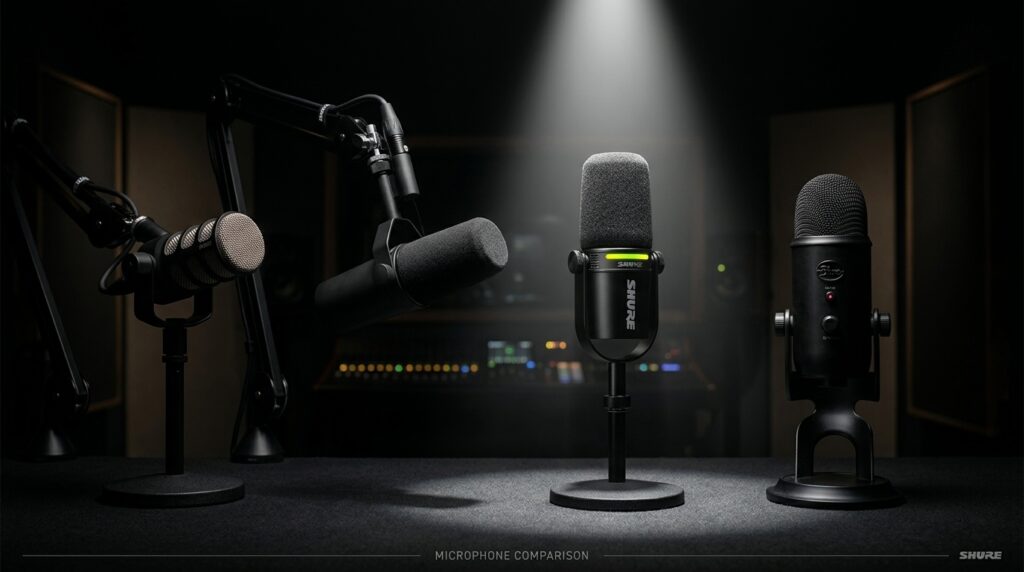
Choosing a microphone is rarely about absolute sound quality alone. Workflow, environment, and long-term flexibility often matter more. Here’s how the Shure MV7 mic compares to the microphones people most commonly consider alongside it.
Shure MV7 vs Shure SM7B
The Shure SM7B remains an industry benchmark in treated studios with high-end preamps. It delivers deeper low-end weight and slightly richer texture—but demands an audio interface, ample gain, and experience.
Real-world takeaway:
If you already own professional gear and record in a treated space, the SM7B still wins on absolute depth. For everyone else, the MV7 is far more practical and achieves a broadcast-ready result with dramatically less effort.
Shure MV7 vs MV7+
The Shure MV7+ adds a full-color touchscreen, RGB feedback, and expanded onboard DSP. The core capsule and voicing are very similar.
Choose the MV7 if you value simplicity and price.
Choose the MV7+ if you want visual control and a more app-like interface.
Sound quality differences are minimal.
Shure MV7 vs Blue Yeti
The Blue Yeti is a condenser mic with multiple pickup patterns. It captures more detail—but also more room noise.
Real-world takeaway:
For spoken word in untreated rooms, the MV7’s noise rejection and consistency make it the better choice.
Shure MV7 vs Rode PodMic / PodMic USB
The Rode PodMic sounds excellent but traditionally required an interface. The Rode PodMic USB adds USB but offers less software maturity.
Real-world takeaway:
The MV7’s hybrid design and software ecosystem provide greater flexibility for creators who want to grow their setup over time.
Pros and Cons (Honest Assessment)
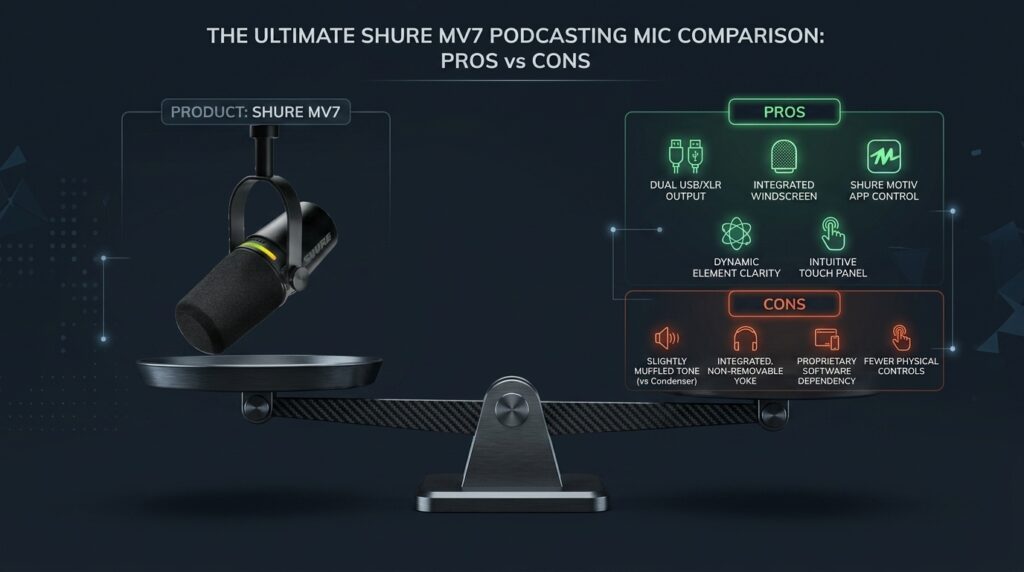
Pros
- Broadcast-style vocal clarity
- Excellent background noise rejection
- Dual USB and XLR connectivity
- Durable, professional build
- Useful software with real DSP value
- Ideal for untreated rooms
- Strong long-term upgrade path
Cons
- More expensive than entry-level USB mics
- XLR mode benefits from decent preamps
- Not designed for detailed acoustic instrument recording
Who Should Buy Shure MV7 mic?
Ideal Buyers
- Podcasters (solo or remote)
- Streamers and gamers
- YouTubers and voice-over creators
- Educators and course creators
- Remote professionals and consultants
- Creators upgrading from USB condensers
Who Should Skip It
- Studio vocalists needing condenser-level detail
- Musicians recording complex acoustic instruments
- Buyers on very tight budgets
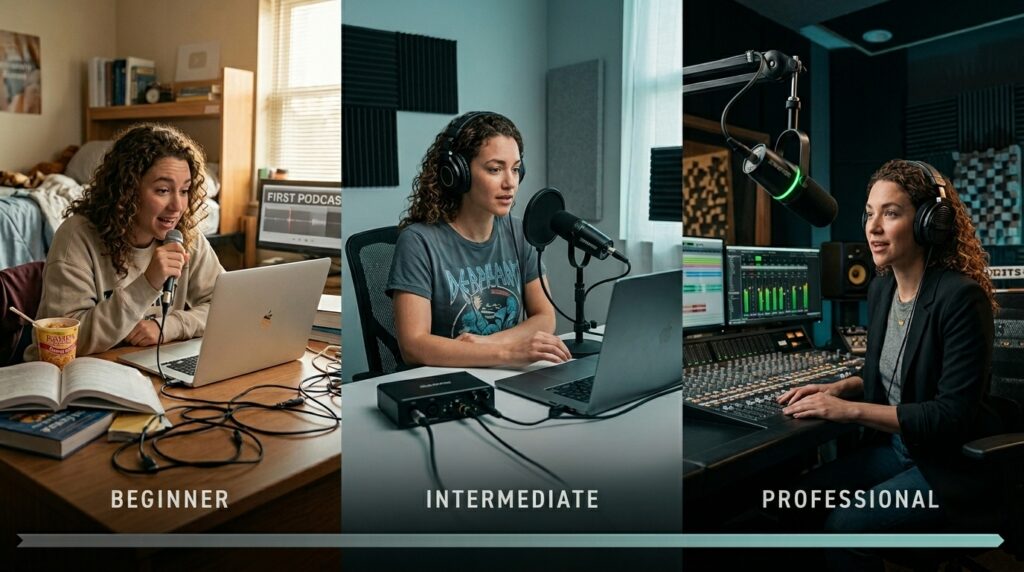
Buyer Workflow: From Beginner to Pro
Beginner (USB, Zero Complexity)
- Plug in via USB
- Enable Auto Level Mode
- Set distance preset
- Record immediately
Intermediate (USB, Manual Control)
- Manual gain and light compression
- Subtle EQ for consistency
- Reduced pumping and more control
Advanced (XLR, Full Control)
- Connect to an interface or mixer
- Use external processing
- Expand to multi-mic setups
The key advantage: you never replace the microphone—only the way you connect it.
Accessories That Actually Matter
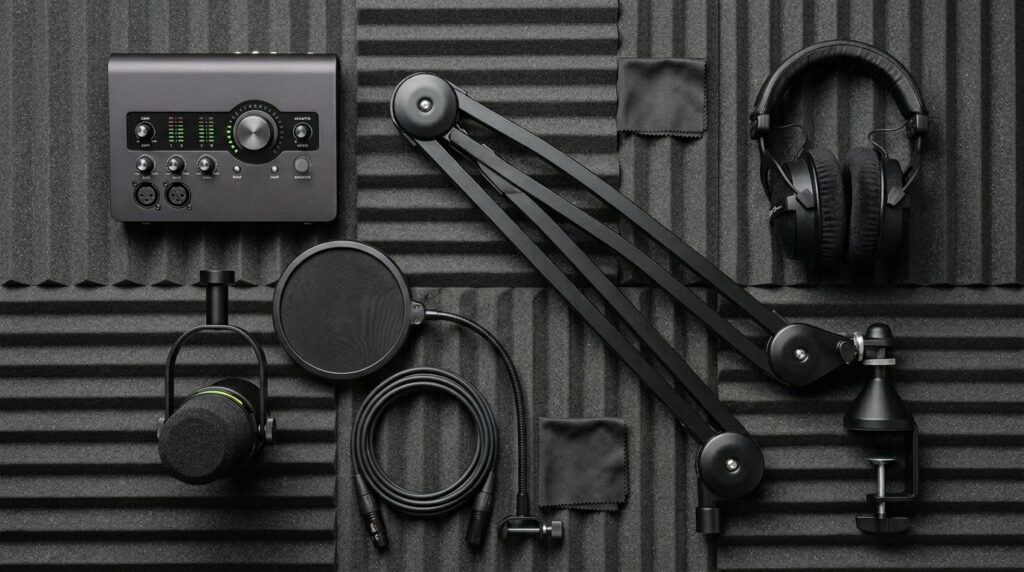
- Boom arm: Improves positioning and isolation
- Closed-back headphones: Accurate monitoring
- Audio interface (for XLR): Expands control
Low impact: expensive cables, elaborate shock mounts, oversized pop filters (the MV7’s built-in windscreen is effective).
Frequently Asked Questions
Does the MV7 need an audio interface?
No. USB mode works without any additional hardware.
Is it good for untreated rooms?
Yes—this is one of its strongest advantages.
Can I use it with a phone or tablet?
Yes, with the appropriate USB adapter.
Do I need a Cloudlifter?
Not in USB mode. In XLR mode, it depends on your interface’s gain.
Is it better than the Blue Yeti for podcasts?
For noise rejection and spoken word, yes.
Final Verdict: Is Shure MV7 mic Worth It?
The Shure MV7 mic succeeds because it aligns with how people actually create content today. It prioritizes clarity, consistency, and practicality over chasing studio-only perfection. For spoken-word creators working in real rooms, it delivers a professional result with minimal friction—and it grows with you as your setup evolves.
If your goal is reliable, broadcast-quality voice for podcasts, streams, videos, or professional communication, the Shure MV7 mic is one of the smartest and safest microphone investments you can make.
You can take a Look on the other Microphones review here.
Ready to upgrade your sound and take your content to the next level?